91果冻传媒

Education Reform

Education reform is in the works, and you can stay updated on the latest changes, debates, and policies here. Learn more about No Child Left Behind and how it impacts your child. Explore how federal and state government is working to improve school performance, student achievement and education standards.

View the most popular articles in Education Reform:

Year-Round School Calendars: Pros, Cons, Research

Updated
|
Year-Round School Calendars: Pros, Cons, Research
Explore year-round school calendars, including benefits, drawbacks, and what academic research says about student outcomes.

Year-round school calendars have gained renewed attention as districts look for ways to improve student outcomes, reduce learning loss, and make better use of school facilities. Unlike traditional academic calendars with long summer breaks, year-round schooling redistributes across the entire year, typically through shorter, more frequent breaks.

For families exploring public school options, understanding how year-round schedules work and whether they improve academic performance is essential. This guide examines the structure, advantages, drawbacks, and what current academic research reveals about their effectiveness.

What Is a Year-Round School Calendar?

A calendar does not increase the total number of school days. Instead, it reorganizes them.

Most public schools in the United States operate on a 180-day calendar. Year-round schools maintain that same number but divide it differently. A common model is the 45-15 schedule:

  • 45 days of instruction
  • 15 days of break
  • Repeated throughout the year

Some districts also use multi-track systems, where different groups of students attend school on staggered schedules. This approach helps address overcrowding without building new facilities.

Pros of Year-Round School Calendars

Reduced Summer Learning Loss

One of the most widely cited benefits is the reduction of summer learning loss, often called the 鈥渟ummer slide.鈥

Research and policy overviews highlight how shorter breaks can help reduce learning regression and support knowledge retention.

More Consistent Learning Pace

Frequent breaks allow students and teachers to recharge without losing academic momentum. This can lead to:

  • Improved focus during instructional periods
  • Reduced burnout
  • Better
. . .read more

Outdoor Learning in Urban Schools: Forest School Programs

Updated
|
Outdoor Learning in Urban Schools: Forest School Programs
Explore how urban districts adopt outdoor learning and forest school programs to boost student engagement, well-being, and academic success.

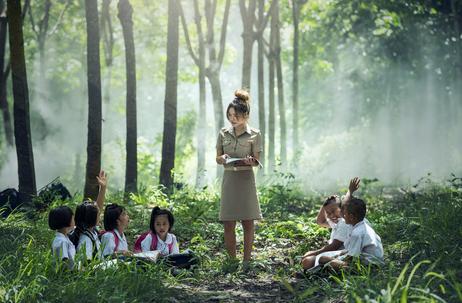
Outdoor learning and forest school programs are no longer limited to rural campuses. Across the country, urban districts are integrating nature-based education into their curricula, redefining what learning can look like in city environments. As interest in holistic education grows in 2026, public schools are increasingly embracing these models to support student well-being, engagement, and academic development.

This shift reflects a broader recognition that meaningful learning need not be confined to traditional classrooms. Even in densely populated areas, schools are finding creative ways to connect students with nature. For families exploring broader public school innovations, resources like 91果冻传媒 provide helpful context on evolving educational models.

What Are Forest School Programs?

Forest schools originated in Northern Europe and emphasize child-led, experiential learning in natural settings. While traditionally associated with wooded areas, the core principles are adaptable to urban contexts.

Key characteristics include:

  • Regular outdoor sessions in green spaces
  • Inquiry-based, student-driven activities
  • Emphasis on problem-solving and resilience
  • Integration of social-emotional learning
  • Minimal reliance on rigid lesson structures

In urban districts, forest school programs often take place in city parks, school gardens, or repurposed outdoor spaces.

Why Urban Districts Are Adopting Outdoor Learning

Urban educators face unique challenges, including limited space, high student density, and increased academic pressures. Outdoor learning offers several benefits that directly address these issues.

Improved Student Engagement

Students who struggle in traditional classrooms often thrive in outdoor environments. Hands-on activities, movement, and real-world exploration can re-engage learners who may feel disconnected from conventional instruction. Schools highlighted in

. . .read more

Community Schools Model: Integrated Services and Long-Term Results

Updated
|
Community Schools Model: Integrated Services and Long-Term Results
Explore the community schools model, how integrated services support students and families, and the long-term academic and social outcomes for public schools.

Public schools increasingly face challenges that extend far beyond academics. Issues such as poverty, mental health needs, housing instability, and food insecurity all influence a student鈥檚 ability to learn. In response, many districts are turning to the community schools model, an approach that integrates education with social services and community partnerships.

The community schools model positions schools as neighborhood hubs where students and families can access academic support, health services, counseling, and enrichment programs. By addressing barriers to learning directly, this integrated approach aims to improve both educational outcomes and long-term community wellbeing.

As public education evolves, understanding how community schools work and the results they produce can help families and educators evaluate their potential impact.

What Is the Community Schools Model?

The community schools model transforms traditional public schools into collaborative centers that combine education with wraparound services and family engagement initiatives. Rather than operating as isolated academic institutions, these schools partner with nonprofits, health providers, and local agencies to meet a wide range of student needs.

According to the , community schools are designed as neighborhood hubs where families, educators, and community members collaborate to support student success.

Core principles typically include:

鈥 Integrated student supports
鈥 Expanded learning opportunities
鈥 Active family and community engagement
鈥 Collaborative leadership and decision-making

These components allow schools to respond to local challenges while maintaining a strong academic focus.

Why Integrated Services Matter

Students cannot focus fully on learning when basic needs are unmet. The community schools model

. . .read more

91果冻传媒 Demographics & Inclusion Trends in 2025

Updated
|
91果冻传媒 Demographics & Inclusion Trends in 2025
Explore key 2025 trends in U.S. public school demographics and inclusion, from rising diversity to DEI debates and policy challenges.

91果冻传媒 Demographics & Inclusion: Trends for 2025

As public schools navigate an ever-changing social landscape, 2025 brings with it notable trends in demographics and inclusion. Rising diversity, shifting enrollment patterns, and debates over diversity, equity, and inclusion (DEI) are shaping the conversation in districts across the United States. This article examines key data points and emerging dynamics that parents, educators, and stakeholders should watch.

1. Changing Enrollment Patterns: A Slow but Steady Shift

1.1 Enrollment Remains Below Pre-Pandemic Levels

According to the National Center for Education Statistics (NCES), public school enrollment held nearly steady from fall 2022 to fall 2023 at 49.5 million students, but remains 2.5% below the pre-COVID peak in 2019.

Elementary and middle grade enrollment declined most sharply, while high school (grades 9鈥12) saw a slight increase.

  • These demographic shifts matter because declining enrollment can influence school funding, staffing, and district planning.

1.2 Regional Divergence in Enrollment Trends

  • Districts in fast-growing regions鈥攕uch as parts of the Sun Belt and Southeast鈥攁re under pressure to expand capacity or rezone due to uneven population growth. 91果冻传媒

  • By contrast, many rural or inland districts in the Rust Belt and West are seeing sharper enrollment drops, creating fiscal stress.

2. Increasing Racial and Ethnic Diversity

2.1 Long-Term Demographic Shifts

The racial and ethnic

. . .read more

The Debate Over Standardized Curriculum 鈥 2025 Perspective

Updated
|
The Debate Over Standardized Curriculum 鈥 2025 Perspective
A comprehensive 2025 update on the debate over standardized curriculum鈥攚hat鈥檚 changed in policy, practice and outcomes for students and schools.

The Debate Over Standardized Curriculum (2025 Update)

Introduction
In the United States, the conversation around a standardized curriculum continues to shape policy, school practice and parent expectations. Whether defined broadly as a common set of expectations for what all students in a given grade should learn, or more narrowly as state鈥恗andated frameworks aligned with assessments, the notion of standardized curriculum remains central in debates over equity, quality and innovation in K-12 education. This article revisits that debate with the latest data, policy shifts and real鈥恮orld examples through 2025.

What We Mean by 鈥淪tandardized Curriculum鈥

A standardized curriculum typically refers to a clearly defined set of learning goals, content specifications and instructional expectations applied across multiple schools or districts鈥攐ften with alignment to standardized assessments. The aim is to ensure all students, regardless of school or location, receive equivalent opportunities to learn core knowledge and skills.

Proponents argue it brings consistency, transferability (when students change schools), transparency for parents and alignment with college鈥 and career-readiness goals.Meanwhile, critics caution that one size may restrict teacher autonomy, undermine local context, and incentivize 鈥渢eaching to the test鈥 at the expense of deeper learning.

In 2025, the tension between standardization and flexibility remains acute, but the landscape is shifting in response to student performance data, pandemic disruptions and new policy directions.

Current Policy and Student Performance Trends (2025)

Student Achievement

Recent results from the

. . .read more

Recent Articles

Transitioning to High School: A Family Guide
Learn how to prepare for high school with practical tips for families before freshman year, from academics to social readiness.
School Vouchers 2026: Updated Pros and Cons
Explore school vouchers in 2026, including updated pros, cons, policy changes, and what families should know before choosing.
Transitioning to Middle School: Summer Planning Guide
A practical 2026 summer planning guide to help parents support a smooth middle school transition for their child.