91¹û¶³´«Ã½

91¹û¶³´«Ã½ Policies

From unions to vouchers, school budgets to discipline policies, we cover some of the most controversial issues affecting public schools today. Learn more about education reform and how it impacts your family. Keep current on the latest controversies regarding religion, sex-education, civil rights and more.

View the most popular articles in 91¹û¶³´«Ã½ Policies:

Standards Based Grading: How It Works and Transcript Impact

Updated
|
Standards Based Grading: How It Works and Transcript Impact
Learn how standards-based grading works in public schools, how it appears on transcripts, and what parents and colleges should understand.

Standards-based grading (SBG) is becoming increasingly common in public schools across the United States. Instead of traditional letter grades such as A, B, or C, this system measures how well students master specific academic standards.

For parents and students reviewing report cards or transcripts, the shift can initially seem confusing. However, the purpose is straightforward. Standards-based grading is designed to provide a clearer and more accurate picture of what a student actually knows and can do.

As districts emphasize skill mastery and alignment with academic standards, understanding how standards-based grading works and how it affects transcripts has become increasingly important for families navigating today’s public education system.

What Is Standards-Based Grading?

Standards-based grading evaluates student performance based on mastery of clearly defined learning objectives rather than cumulative points or percentages.

These learning objectives are typically tied to state curriculum standards or frameworks such as Common Core. Each standard represents a specific concept or skill students should learn during a particular grade level.

Instead of combining homework, quizzes, participation, and tests into a single percentage grade, teachers assess how well a student demonstrates proficiency in each skill.

Typical mastery levels may include:

Level

Meaning

Exceeds Standard

Student demonstrates advanced mastery

Meets Standard

Student shows expected grade-level proficiency

Approaching Standard

The student is developing an understanding

Below Standard

Student needs additional support

This system allows teachers and parents to see exactly which skills students have mastered and which areas require improvement.

Why Schools Are Moving Toward Standards-Based Grading

Traditional grading systems often combine academic achievement with behavioral factors such

. . .read more

Guide for New Movers: Enrolling in a New School District 2026

Updated
|
Guide for New Movers: Enrolling in a New School District 2026
A 2026 step-by-step guide for new movers on enrolling children in a new public school district, including documents, deadlines, and special programs.

Guide for New Movers: How to Enroll Your Child in a New District in 2026

Relocating to a new city or state brings excitement and opportunity, but it also introduces a long list of logistics for families with school-aged children. One of the most time-sensitive tasks is enrolling your child in a new public school district. Requirements can vary widely by state and district, and policies continue to evolve in 2026, particularly around digital records, residency verification, and school choice options.

This Guide for New Movers: How to Enroll Your Child in a New District in 2026 is designed to walk families through the process step by step. Whether you are moving across town or across the country, understanding what to expect can help ensure a smooth transition for your child.

Understanding School District Boundaries in 2026

Public schools in the United States are assigned primarily based on where a family lives. School district boundaries determine which elementary, middle, and high schools a student is eligible to attend. In 2026, most districts continue to rely on geocoded address systems, which automatically assign schools once a home address is entered into the district database.

Before beginning enrollment, confirm your assigned district and schools. Many districts provide online school locator tools through their websites. If you are unsure, your local district office can verify zoning based on your lease or property documents.

Families should also be aware that some districts offer alternatives to

. . .read more

Back-to-School Tech & Online Learning Readiness Checklist

Updated
|
Back-to-School Tech & Online Learning Readiness Checklist
A 2026 guide to back-to-school tech & online learning readiness, helping families prepare devices, connectivity, skills, and safety.

Back-to-School Tech & Online Learning Readiness: What Every Family Should Check

Back-to-school planning in 2026 extends far beyond backpacks and schedules. For families across the country, back-to-school tech & online learning readiness now plays a central role in academic success. Whether students attend fully in-person schools, hybrid programs, or virtual classes, reliable technology and strong digital habits are essential.

Public schools increasingly rely on learning management systems, cloud-based assignments, adaptive software, and online communication tools. As a result, back-to-school tech & online learning readiness is no longer optional. It is a foundational requirement for participation, engagement, and achievement.

This guide walks families through a comprehensive, practical checklist for back-to-school tech & online learning readiness in 2026, with updated insights, expert-informed best practices, and realistic solutions for households with varying resources.

Why Back-to-School Tech & Online Learning Readiness Matters More Than Ever

School systems have stabilized many of the emergency practices introduced earlier in the decade, but digital learning remains embedded in daily instruction. According to the U.S. Department of Education’s Office of Educational Technology, technology is now a core instructional infrastructure, not a supplemental tool. That reality makes back-to-school tech & online learning readiness a prerequisite for equal access to coursework, assessments, and teacher support.

Families who invest time in back-to-school tech & online learning readiness often report fewer missed assignments, smoother communication with schools, and reduced stress during the school year.

Device Readiness: Start With the Basics

. . .read more

The Future of Teacher Tenure in 2026

Updated
|
The Future of Teacher Tenure in 2026
Explore 2026 trends in teacher tenure, policy shifts, costs, salaries, and what parents should know for school planning and quality classroom instruction.

The Future of Teacher Tenure

Teacher tenure remains a central and evolving issue in U.S. public education, with major implications for school quality, staffing stability, and parent planning as families evaluate schools on behalf of their children.

What Teacher Tenure Means Today
Teacher tenure generally refers to employment protections granted to public school teachers after a probationary period, intended to ensure due process before dismissal. While tenure historically offered stability for educators, enabling them to advocate for students without fear of arbitrary termination, the policy is increasingly reexamined as districts and states respond to teacher shortages, accountability pressures, and performance concerns.

Current Landscape: Numbers, Salaries, and Teaching Workforce Trends
Understanding the modern workforce helps parents grasp how tenure fits into broader staffing dynamics:

  • The United States employs more than 3.2 million public school teachers in K-12 settings, with student-to-teacher ratios averaging around 15:1, reflecting national efforts to balance class sizes and instructional costs.

  • Teacher turnover remains high, with about 44 percent of teachers leaving the profession within their first five years and roughly 8 percent exiting annually overall. Average tenure in a school is about 3.3 years, indicating that many educators do not remain long enough to obtain traditional protections.

  • National average teacher pay is approximately $65,000, though salaries vary widely by state and urban versus rural district. Despite increases over the past decade, inflation-adjusted pay trails comparable professional wages, contributing

. . .read more

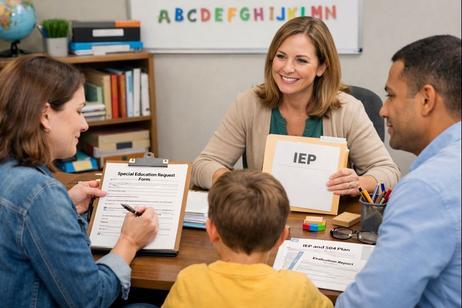
How to Request Special Education Services at School Registration

Updated
|
How to Request Special Education Services at School Registration
A step-by-step guide for families on how to request special education services at school registration, including IEPs, 504 plans, timelines, and tips.

How to Request Special-Education or Support Services at School Registration

Registering a child for school is an important milestone, particularly for families whose children need additional academic, behavioral, or health-related support. Understanding how to request special education services at school registration can help ensure students receive appropriate services from the first day of school.

Each year, more families ask how to request special education services at school registration as schools expand inclusive practices and support options. Whether your child has an existing Individualized Education Program (IEP), a Section 504 plan, or suspected learning or developmental needs, knowing the process empowers families to advocate effectively.

This guide explains how to request special education services at school registration, what documentation to prepare, what timelines to expect, and how schools respond under current federal and state requirements.

Understanding Special Education and School-Based Support Services

Before learning how to request special education services at school registration, it helps to understand the types of supports schools may offer.

Common school-based support services include:

  • Special education under the Individuals with Disabilities Education Act (IDEA)

  • Section 504 accommodations under the Rehabilitation Act

  • Speech and language therapy

  • Occupational and physical therapy

  • Behavioral and social-emotional supports

  • English language learner services

  • School-based counseling

. . .read more

Recent Articles

What It Takes to Run a 91¹û¶³´«Ã½ Day-to-Day
Explore what it takes to run a public school daily, from leadership and staffing to budgeting, safety, and student support systems.
Restorative Justice in Schools: What the Data Shows
Explore restorative justice in schools, including discipline data, outcomes, and implementation insights for educators and families.
Year-Round School Calendars: Pros, Cons, Research
Explore year-round school calendars, including benefits, drawbacks, and what academic research says about student outcomes.

91¹û¶³´«Ã½ Policies

EDUCATION REFORM
Education reform is in the works, and you can stay updated on the latest changes, debates, and policies here. Learn more about No Child Left Behind and how it impacts your child. Explore how federal and state government is working to improve school performance, student achievement and education standards.
TEACHERS AND UNIONS
A comprehensive look at teachers, tenure, and unions. Learn how unions impact school performance. Explore the impact of education reform on teaching qualification standards, traditional unions and controversial tenure rules.
PUBLIC SCHOOL BUDGETS
We offer an overview of public school budgets; where the money comes from, how it’s spent and what schools are doing to get more funding. Learn how schools are cutting budgets and how the cuts will impact your child. Delve into some of the creative ways school districts are trying to raise money and where the extra money is spent.
VOUCHERS
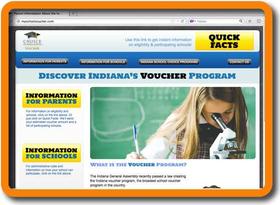
Explore both sides of the school voucher debate. Learn what your options are, how those choices are funded and the impact on your local school district. From the latest government initiatives to results from recent studies, explore vouchers and the options they provide.
SCHOOL DISCIPLINE POLICIES
Examine the various discipline methods being put to use in public schools. From detention to expulsion, spanking to handcuffing, school discipline can often be controversial. Does spanking work? Do police belong in schools? Learn more about what is being done to punish out of control students.
SCHOOL CONTROVERSIES
The most controversial issues impacting public school students today. From bullying to book bans, this is a comprehensive look at some of the most oft-debated issues. This section features articles on school segregation, religion, over-crowding, civil rights, and green technology.