91果冻传媒

Updated
|
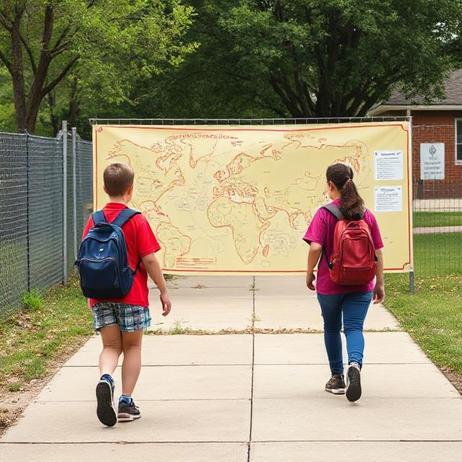
Career Readiness in Public Schools Beyond Tests
How public schools can teach career readiness skills beyond standardized tests鈥攑reparing students for real-world success.

Career Readiness in Public Schools: Teaching Skills Beyond Standardized Tests

In 2025, discussions about education reform increasingly emphasize that career readiness must extend beyond test scores if public schools are to truly prepare students for life after graduation. For many students, success hinges not only on algebra or reading skills, but also on communication, critical thinking, adaptability, and real-world problem solving. To close the 鈥渟kills gap,鈥 public schools must adopt new approaches and metrics鈥攁nd equip educators, students, and communities for a future that values more than standardized test performance.

This article explores why career readiness matters, what skills matter most, how public schools can integrate them, and how to evaluate success beyond test results.

Why Move Beyond Standardized Testing?

The Limits of Tests as a Sole Metric

Standardized tests remain deeply embedded in public school accountability systems. Yet as critics and reformers note, overreliance on such tests distorts instruction, narrows curricula, and fails to reflect the full range of student readiness. The problem is not testing itself, but making tests the final arbiter of success鈥攅ven when they capture only a fraction of what students must do in life or work.

The Skills Gap & Employer Expectations

Employers routinely report that recent graduates lack key 鈥渆mployability鈥 or 鈥渃areer readiness鈥 skills鈥攃ommunication, teamwork, initiative, digital literacy, self-management. Schools that focus narrowly on test preparation risk leaving students unprepared for their first job or further

. . .read more

How Public Schools Tackle Chronic Absenteeism (Post-Pandemic)

Updated
|
How Public Schools Tackle Chronic Absenteeism (Post-Pandemic)
Public schools deploy data, early warning systems & wrap-around supports to combat chronic absenteeism in the post-COVID era.

How Public Schools Are Responding to Chronic Absenteeism Post-Pandemic

Chronic absenteeism鈥攖ypically defined as missing 10% or more of school days鈥攈as emerged as one of the most persistent challenges for public schools in the post-pandemic era.After spiking during COVID-19, rates have remained elevated, prompting school districts nationwide to renew strategies to reengage students.

This article examines how public schools are confronting chronic absenteeism today: the strategies in use, early outcomes, remaining obstacles, and promising innovations to watch.

The Post-Pandemic Landscape: Why Schools Are Still Wrestling With Absences Elevated Rates and Uneven Recovery

  • In the 2024鈥25 school year, chronic absenteeism in many districts remained above pre-pandemic levels, with some urban districts reporting 30% or more of students missing 10%+ of days.

  • According to AEI data, absenteeism fell modestly (to ~23.5%) in recent years, but still hovers well above the ~15% pre-COVID benchmark.

  • Some districts are improving, but many are not on pace to return to pre-pandemic norms, especially in high-poverty or urban settings.

Why Does It Persist?

Schools and researchers cite multiple interlocking causes:

  1. Habits and norms shifted during the pandemic
    Some students and families adapted to looser structures, remote learning flexibility, or more lenient attendance enforcement, making reentry to rigid in-class

. . .read more

Understanding Standardized Testing Changes 2025

Updated
|
Understanding Standardized Testing Changes 2025
Explore what鈥檚 new in standardized testing for 2025 and how parents can help students prepare effectively.

Understanding Standardized Testing: What鈥檚 Changing in 2025 and How to Help Your Child Prepare

Standardized testing has long shaped how schools, colleges, and parents measure student achievement. Yet in 2025, testing looks very different from even a few years ago. With the shift to digital exams, evolving admission policies, and new adaptive scoring systems, families are navigating unfamiliar territory.

This guide explains what鈥檚 changing, why it matters, and how you can help your child prepare for success.

1. The Big Picture: How Standardized Testing Is Evolving Digital delivery becomes the default

The SAT is now fully digital worldwide, following the U.S. rollout in 2024. Students take the exam on laptops or tablets using secure testing software. The test鈥檚 adaptive design adjusts question difficulty based on performance, offering a faster and more individualized experience.
鈫 College Board reports that the digital SAT takes about two hours鈥攏early an hour shorter than the paper version.

The ACT is also moving toward digital testing, offering computer-based options in select states and planning full adoption by 2026. These adaptive exams aim to make assessments more precise and accessible.

Shorter, more focused tests

Students will notice leaner assessments across grade levels. The new SAT鈥檚 reading and writing sections are combined, with shorter passages and fewer questions. Similarly, the ACT is piloting reduced-length versions for school-day testing.

State K鈥12 tests are following suit. Many districts are trimming redundant assessments or integrating them into online

. . .read more

91果冻传媒 Boundaries & Equity in 2025

Updated
|
91果冻传媒 Boundaries & Equity in 2025
How 2025 boundary policies affect equity in U.S. public schools 鈥 updated insights, challenges, and strategies for fairer access.

91果冻传媒 Boundaries and Equity in 2025

Public school boundaries are far more than administrative lines鈥攖hey are powerful levers that shape who gets access to quality education, which communities benefit or suffer, and how equitable opportunities will be in the decade ahead. In 2025, as districts across the United States grapple with demographic shifts, funding challenges, and rising scrutiny of equity, the way boundaries are drawn and redrawn is under renewed attention.

This article retains the original framework鈥攄efining boundaries, exploring their impact, reviewing trends and challenges, and proposing strategies鈥攂ut updates data, policies, and real鈥恮orld examples through a 2025 lens.

What Are 91果冻传媒 Boundaries?

Public school boundaries, also known as attendance zones or enrollment zones, are the geographic lines drawn by school districts that determine which public school a student will attend based on their address. They serve multiple functions:

  • Assign students to schools to manage enrollment and capacity

  • Reflect district priorities in transportation, community cohesion, and resource allocation

  • Implicitly influence demographics, socioeconomic balance, and access to programs

In practice, boundaries act as gatekeepers: who can walk, who must bus, and which students gain access to high-performing schools or specialized programs.

How School Districts Draw Boundaries鈥攁nd Why That Matters

Districts typically use a mix of factors when establishing or adjusting boundaries:

  1. Population density and growth projections 鈥

. . .read more

COVID-19鈥檚 Enduring Effects on U.S. Public Schools (2025)

Updated
|
COVID-19鈥檚 Enduring Effects on U.S. Public Schools (2025)
How COVID-19 continues shaping U.S. public schools in 2025: enrollment declines, recovery efforts, mental health, and policy challenges.

COVID-19鈥檚 Lasting Impact on U.S. Public Schools (2025)

The COVID-19 pandemic may no longer dominate headlines, but its imprint on U.S. public schools remains significant in 2025. What once looked like a temporary disruption has evolved into a long tail of academic deficits, enrollment shifts, staffing stress, psychological strains, and equity challenges. In this updated analysis, we revisit how COVID-19鈥檚 lasting impact on U.S. public schools continues to ripple through the system, drawing on new data, district examples, and expert insight.

1. Lingering Academic Recovery and Learning Loss

Despite efforts to 鈥渃atch up,鈥 many districts report that students remain behind where pre-pandemic cohorts once stood. According to research from UC Davis, as of spring 2024, California students lagged roughly half a grade level behind their 2019 peers in core subjects.The learning gap is not uniform: lower-income, rural, and non-White students have tended to recover more slowly, intensifying educational inequities.

A 2025 Harvard analysis notes that national test performance has not rebounded to pre-COVID norms, especially in mathematics and reading, with enduring declines in key states.Moreover, the Education Recovery Scorecard shows that while some districts have surpassed pre-pandemic levels in both math and reading, no state has fully done so.

In practice, districts like Toledo, Ohio, have extended school days, added summer academies, and leveraged small-group tutoring to accelerate recovery. Yet even well-resourced districts caution that extra supports may need

. . .read more

Recent Articles

Preventing Suicide in Schools: 2026 Guide for Educators
Learn updated 2026 strategies for preventing suicide in schools, including warning signs, intervention plans, and school-wide mental health support.
The Impact of Social Media on Students (2026 Update)
Explore the impact of social media on students in 2026, including academic, mental health, and safety insights for parents and educators.
Building a Summer Reading Plan That Keeps Kids Engaged
Learn how to build a summer reading plan that keeps kids engaged, motivated, and improving literacy skills throughout the break.